Microsoft has recently released a native NVMe SSD performance driver for Windows Server 2025, which has sparked interest as users have discovered a method to enable the same feature on Windows 11 through registry modifications without any cost.
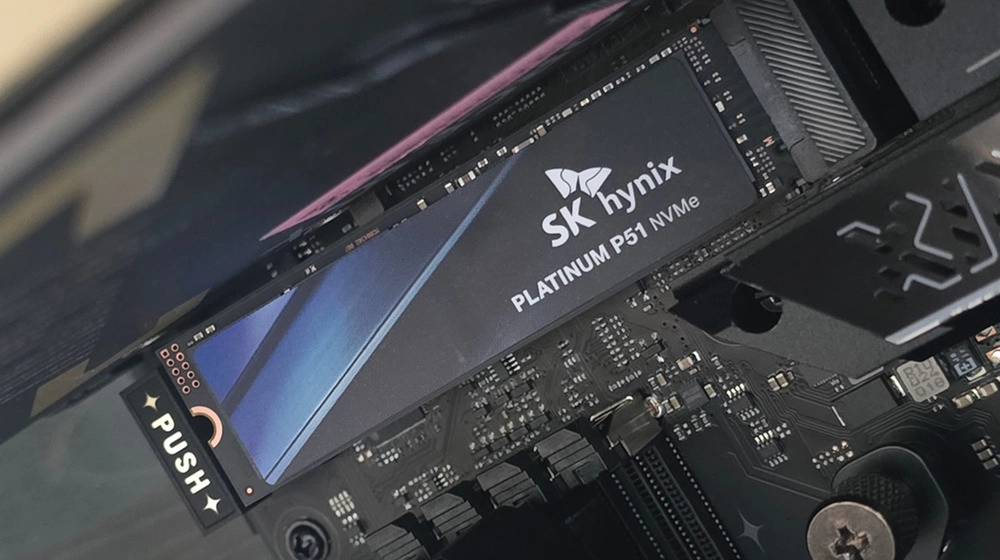
Initial benchmarks indicate significant performance enhancements, especially for consumer PCs and portable gaming devices, particularly in random read and write operations on SSDs. For instance, a benchmark by a user on X demonstrated a performance increase using an SK hynix Platinum P41 2TB SSD. After activating the native NVMe driver, the AS SSD benchmark score jumped from 10,032 to 11,344—an impressive 13% uptick.
The most notable improvements were found in random write performance, with a 16% enhancement in the 4K random write and a 22% boost in the 4K-64Thrd workloads.
Further tests reported by a user on Reddit showed that the Claw 8 AI+ handheld with a Crucial T705 4TB SSD also benefited significantly. While sequential read and write speeds were moderate, random read speeds were up by 12%, and an astonishing 85% surge was observed in random write speeds. These results correspond with Microsoft’s objective of enhancing input/output operations per second (IOPS) performance.
The introduction of the native driver allows Windows to identify NVMe drives as NVMe devices rather than utilizing outdated SCSI protocols. This transition reduces command translation overhead, thus cutting down processing time and storage latency, which ultimately results in improved performance. The SCSI protocol, built around older mechanical hard drives, has long constrained the true potential of modern NVMe SSDs, especially in enterprise setups.
However, there are some caveats for consumers. Although the use of the native NVMe driver is feasible on Windows 11 through registry tweaks, various third-party SSD management tools, such as Samsung Magician and Western Digital Dashboard, presently exhibit incompatibility and may not operate correctly. For everyday tasks and gaming, most users may not notice any drastic difference, as the primary advantages of this feature cater more to enterprise and server environments.
While Microsoft has successfully implemented native NVMe support on Windows Server after years of relying on outdated storage methods, it remains uncertain when or if this feature will become an official part of mainstream Windows versions. Until then, this capability is considered experimental on Windows 11, better suited for testing rather than casual use.