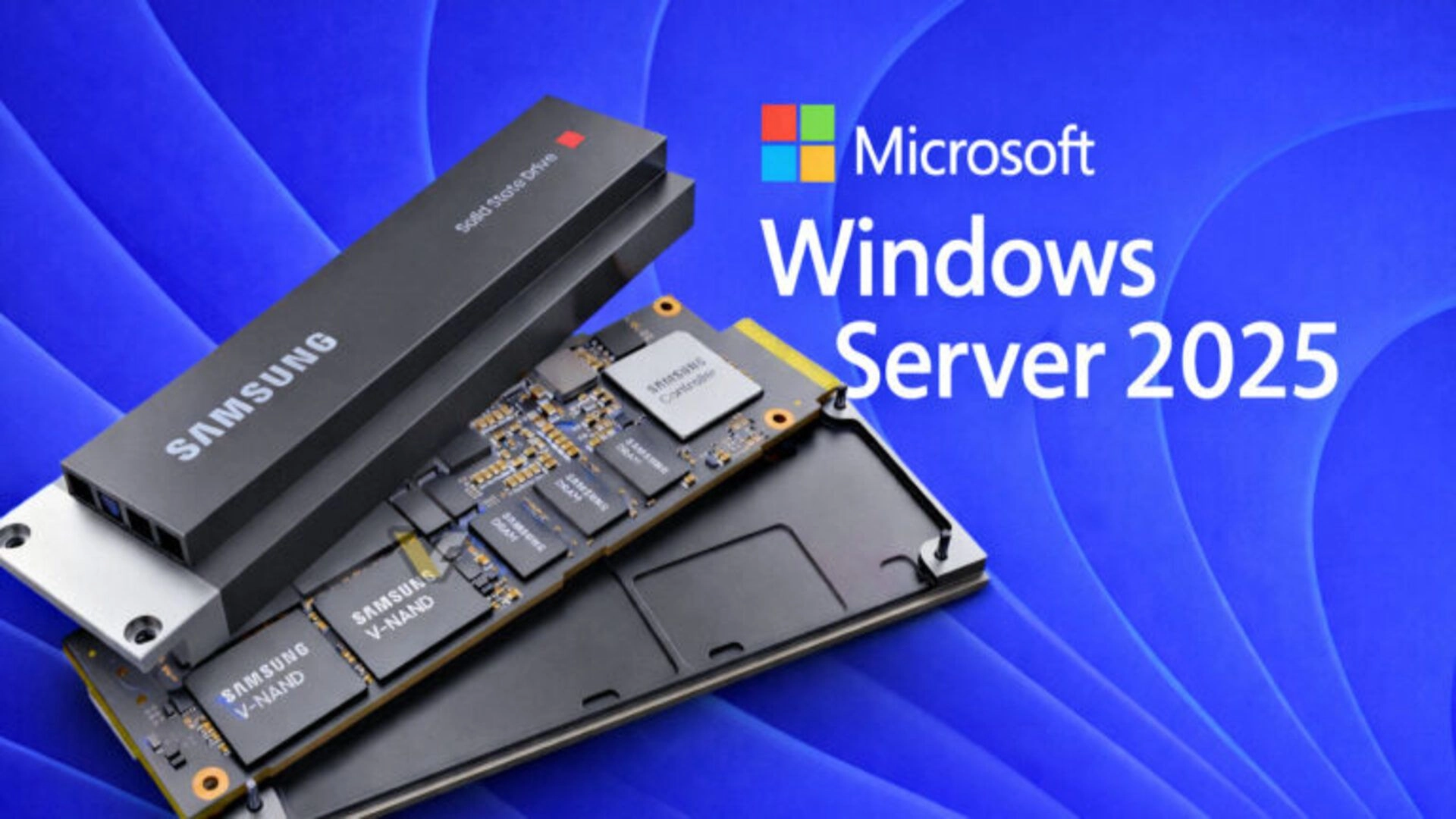
Microsoft has announced the inclusion of native NVMe support in Windows Server 2025, which the company heralds as a "storage revolution." This development is anticipated to bring significant performance enhancements, particularly for enterprise applications. By implementing native NVMe, Windows Server 2025 can unlock the full potential of modern NVMe devices including PCIe Gen5 SSDs, delivering millions of IOPS—far surpassing the capabilities of traditional SCSI-based systems.
Traditional SCSI architecture, originally designed for older disk drives, operates on a single-queue model that limits command throughput. In contrast, NVMe supports tens of thousands of queues, with each capable of simultaneously processing vast numbers of commands. This change is expected to enable servers running Windows Server 2025 to handle much higher workloads with greater efficiency.
Tests using DiskSpd.exe indicate that Windows Server 2025 could achieve up to an 80% improvement in 4K random read IOPS compared to its predecessor, Windows Server 2022. This improvement comes alongside a reduction of around 45% in CPU cycles used per I/O operation. The performance gains are particularly noted in enterprise applications such as SQL Server, OLTP workloads, and virtualization technologies like Hyper-V.
To utilize the benefits of native NVMe, administrators need to verify that their devices are utilizing the in-box Windows NVMe driver as alternative vendor-specific drivers may not achieve the same performance enhancements. The feature is opt-in and requires application of the latest cumulative update, along with configuring a registry key or Group Policy adjustment.
While Microsoft touts this as a significant advancement, it’s worth noting that native NVMe paths have been available in Linux and VMware platforms for several years. The actual performance benefits will depend on the specific workload characteristics, hardware compatibility, and driver utilization, making cautious deployment and thorough validation critical for organizations looking to leverage this technology in production environments.
For more information, visit the related articles on NVMe and storage solutions.