Category: Windows Server 2022
-
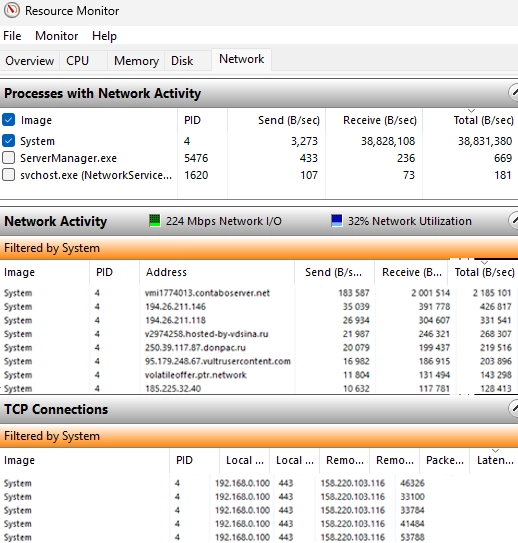
Shielding Your Windows Server: Combat DDoS and Brute-Force Attacks with IPBan
In this article, we explore how to secure Windows Server against DDoS and brute-force attacks using the IPBan tool. The goal is to monitor failed logons and suspicious traffic, blocking the offending IP addresses through Windows Firewall rules. With IPBan, we can establish a straightforward host protection system without relying on external security applications. How…
-
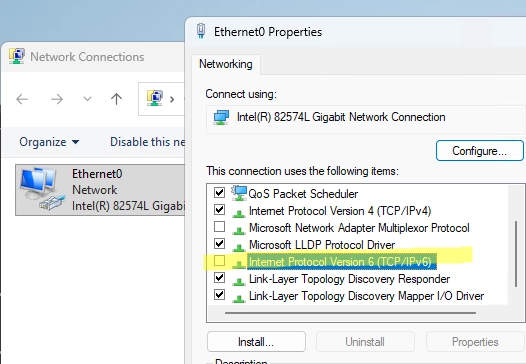
A Step-by-Step Guide to Safely Disable IPv6 on Windows
Although the IPv6 protocol is enabled by default in all Windows versions, it is not commonly used in home and small office networks. As a result, many sources recommend disabling IPv6 to resolve network issues. However, Microsoft advises against completely disabling IPv6 unless absolutely necessary, especially on Windows Server, where various components rely on link-local…
-
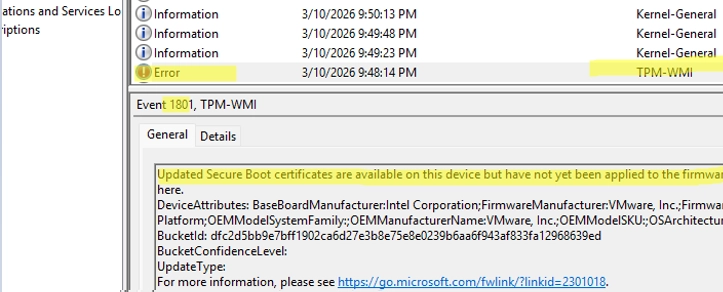
A Comprehensive Guide to Updating UEFI Secure Boot Certificates on Windows Devices
Updating UEFI Secure Boot Certificates on Windows Devices Secure Boot is a UEFI security feature designed to prevent the loading of unsigned or malicious code before the operating system starts. The Microsoft Secure Boot certificates issued in 2011 are set to begin expiring in June 2026. This expiration could lead to the disabling of Secure…
-
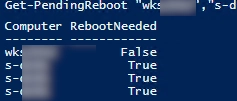
How to Identify Computers with Pending Reboot Status Using PowerShell
After installing certain patches or security updates on Windows systems, a restart may be necessary for them to take effect. However, users may delay rebooting their computers, or automatic reboots might be disabled on servers or workstations using Group Policy settings. This situation can lead to numerous computers in large enterprise networks remaining stuck in…
-
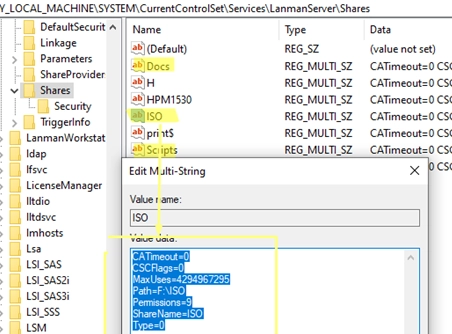
A Step-by-Step Guide to Migrating Your Existing Windows Shares to a New File Server
To migrate existing Windows shares to a new file server, you’ll need to utilize a combination of registry editing and file transfer methods. The shared network folders and their settings are stored under HKLMSYSTEMCurrentControlSetServicesLanmanServerShares in the Windows registry. Step-by-Step Guide for Migration: List Existing Shares:To view current shared SMB resources on a Windows host, use…
-
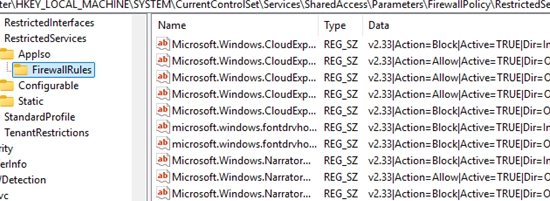
Troubleshooting an Unresponsive Start Menu on Windows Server RDS: A Comprehensive Guide
Occasionally, users encounter issues with the Start Menu or taskbar on RDS hosts utilizing Windows Server 2022 or 2019. Specifically, when a user clicks the Start button in a terminal session, the menu may fail to open, or the RDP session might freeze, rendering it unresponsive. The Start Menu and user interactions are driven by…
-
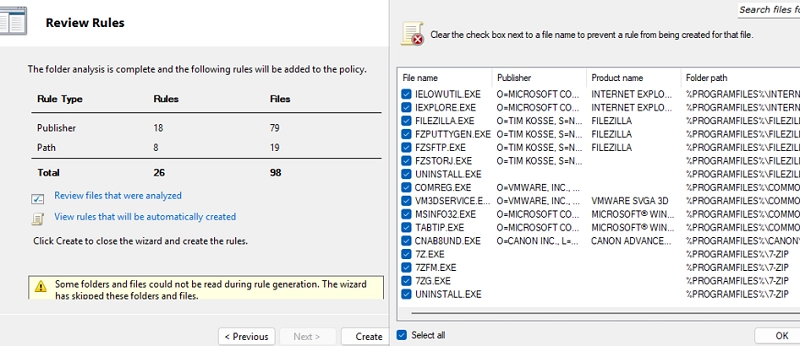
Mastering AppLocker: How to Configure Application Restriction Policies in Windows
Using AppLocker security policies, system administrators can manage which applications run on Windows systems. This tool allows for specific application restrictions, enabling designated user groups to execute applications while blocking others, such as standard users. Initially limited to the Enterprise editions, AppLocker is now accessible in Windows 10 Pro (from version 2004) and all versions…
-
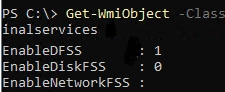
Optimizing Performance: Resource Fair Sharing in Windows Server Remote Desktop Services (RDS)
A prevalent challenge with terminal servers that accommodate multiple users is the potential for one user to initiate a resource-heavy process, which can severely impact the performance of others. For instance, when a single user launches a process consuming over 90% of the CPU, it can render the server nearly unusable for other users. To…
-

Troubleshooting: Windows Stuck at ‘Getting Windows Ready, Don’t Turn Off Your Computer’ Screen
This issue of Windows getting stuck at the "Getting Windows Ready. Don’t turn off your computer" message is fairly common, especially on Windows Server versions (2022, 2019, 2016) and occasionally on Windows 10 and 11. This often occurs after installing updates or modifying system roles and features. When encountering this message, the best initial advice…
-
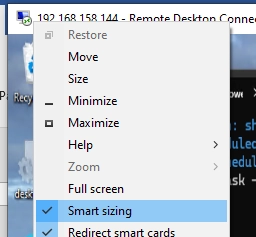
Optimizing DPI Scaling and Font Size for Enhanced RDP (RDS) Experience
Users who work in terminal sessions on an RDS (Remote Desktop Services) server often face a challenge with tiny UI elements making it hard to read. This problem is particularly evident for those using Full HD/HiDPI (Retina) monitors with high resolutions such as 2K and 4K. During an RDP session, users will find that the…